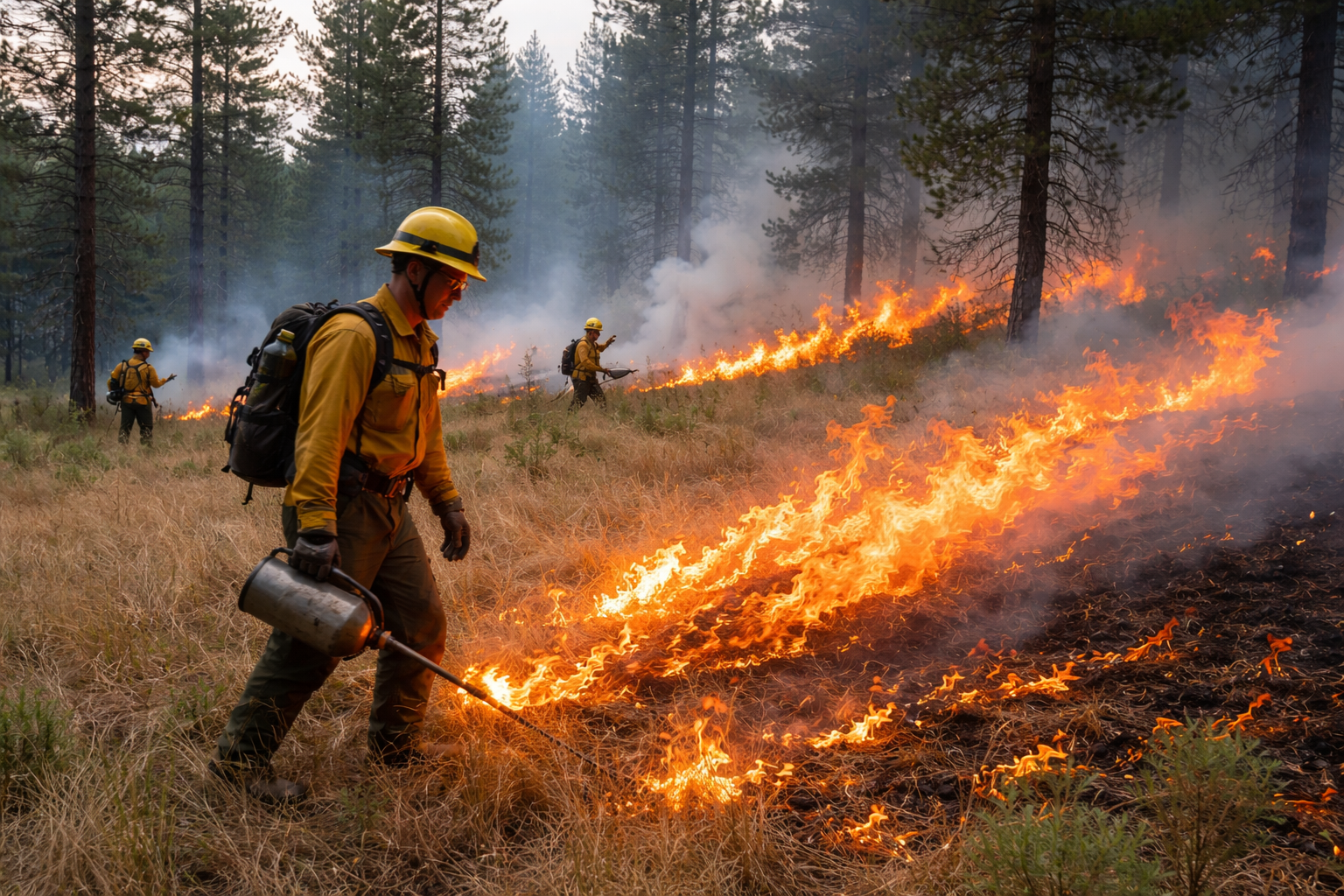
 The North Carolina Wildlife Resources Commission is reminding the public that smoke seen on state game lands this summer may be from prescribed burns.
The agency says people can check its Prescribed Burns Dashboard mapping system to see whether a burn is planned or underway.
Wildlife officials say most prescribed burns on game lands happen between January and March, when cooler temperatures, higher humidity and lighter winds help keep fires low in intensity. But officials say burns also continue into the spring and summer because growing-season fires can do a better job of controlling young hardwoods in some habitats.
The commission conducts about 200 to 300 prescribed burns each year, covering roughly 20,000 to 30,000 acres across North Carolina’s state game lands.
Officials say prescribed burning is one of the most effective and cost-efficient ways to restore and maintain wildlife habitat. Burns help reduce dangerous fuel buildup, improve biodiversity, and encourage the growth of native grasses and other vegetation that provide food and cover for wildlife including quail, deer, turkeys and grassland birds.
The Wildlife Commission also says many rare or habitat-sensitive species, including the red-cockaded woodpecker and Venus flytrap, depend on fire-managed habitats.
Officials say they often hear concerns about wildlife during burns, especially during spring turkey season, but note that fire is a natural part of the environment and that native animals have adapted to it. They add that burn techniques are designed to give animals time and space to escape, and that fresh vegetation often returns within weeks.
For more information on game lands and prescribed burns, visit NCWildlife.gov. And if you are concerned about a possible brush fire or are unsure whether smoke is from a prescribed burn, call 911.